



The Glorious Gospel
Have you ever considered how it would have been to sit by the Sea of Galilee and listen to Jesus preach the Gospel of the Kingdom in His own words?
Can you imagine sitting with Paul in a jail cell and hearing him present the Gospel?
My desire is for new and mature believers alike to explore and experience the wonderful truths found in the Bible, through the eyes of their authors.
This new monthly e- series offers excerpts from The Glorious Gospel, my book on discipleship described in Romans 1-4.
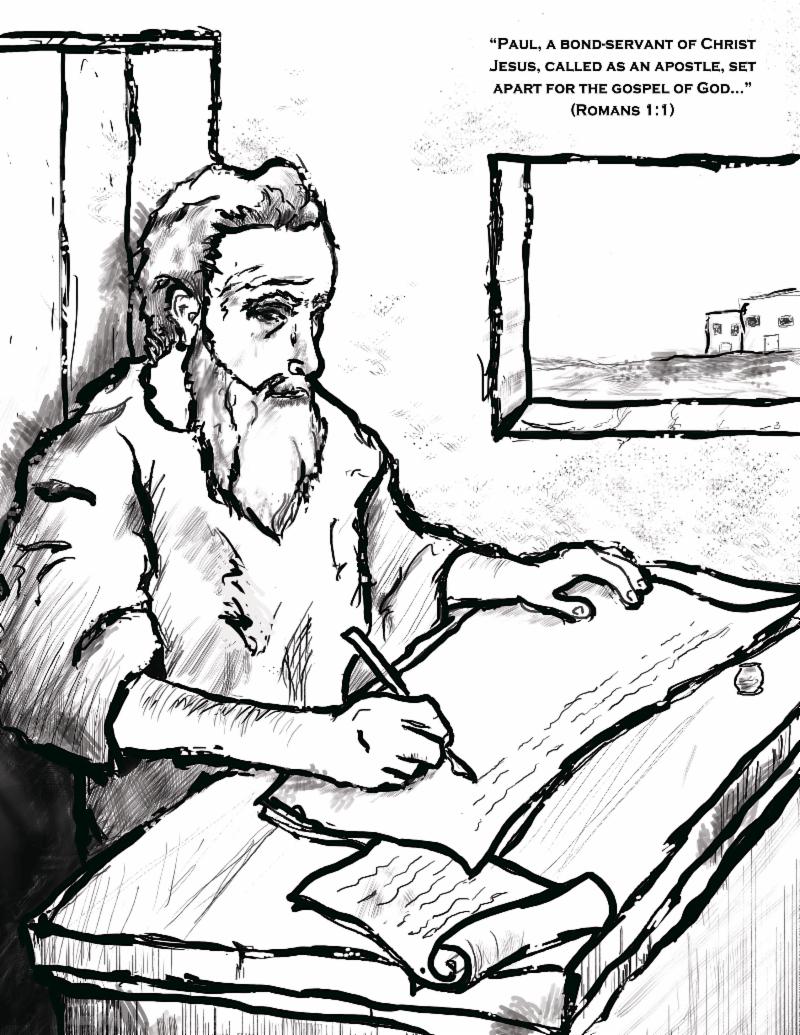
“Paul, a bond-servant of Christ Jesus, called as an apostle, set apart for the gospel of God…” Romans 1:1
Paul starts off his letter in normal Greek fashion—by introducing himself. It is important to observe the humility of Paul as he presents himself to his readers. Throughout his whole introduction, Paul never magnifies his own achievements but only draws attention to what God has graciously done for him. The whole focus of his introduction is the person of Jesus Christ. In Paul’s introduction of himself, he provides credentials to his readers.
A bond-servant of Christ Jesus (1:1a). Paul begins his letter by designating himself to this special and joyful office of bond-slave of Christ. (Note: bond-slave is a more literal translation than bond-servant.) This was a very common title for Christians in the early church (Gal. 1:10; Phil. 1:1; James 1:1; 2 Pet. 1:1). They considered such a title to be a badge of honor.
Why would “slave” be an honorable title? The measure of the honor is directly related to the identity of the master. Paul was proud to be known as the bond-slave of Jesus Christ.
What is a bond-slave? A slave in Paul’s day was a person who was owned by his master. In Jewish society, people became slaves primarily because of debts that could not be paid. According to the Law of Moses, which governed the society of that day, if a person failed to pay his debt as agreed, he was forced to become a slave and work for the one who loaned him the money until the debt was paid. In cases in which the debt was severe, the slave could work up to six years. After a slave worked six years, he was allowed to “go out as a free man without payment” (Ex. 21:2).
Nevertheless, if that slave enjoyed working for his master, he could decide to become a bond-slave. A bond-slave was one who said, “‘I love my master... I will not go out as a free man...’ And his master shall pierce his ear with an awl; and he shall serve him permanently” (Ex. 21:5-6).
Paul is expressing the total belongingness, total allegiance, total service, and absolute ownership and authority given to his master Jesus Christ as a result of his endearing love. Hymn writer Frances Havergal captures the spirit of being a bond-slave in her hymn:
“I love, I love my Master, I will not go out free, For He is my Redeemer; He paid the price for me. I would not leave His service, It is so sweet and blest; And in the weariest moments He gives the truest rest.”
This is the spirit of being a bond-servant and the heart behind the apostle Paul in calling himself by this title of — A BOND–SERVANT OF JESUS CHRIST.
I pray that these verses bless you, my fellow bond-servants in Christ.
~ Dr. Shannon Hurley


